

By Francis Ayomide Ojei

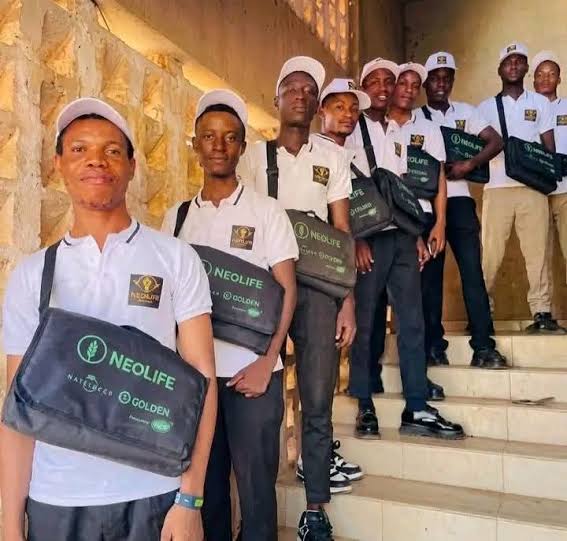
For many students and young people, financial pressure creates urgency. And when there’s urgency, people don’t always stop to think things through. Programmes like Faith Heroic Generation, popularly known as FHG present themselves as way to financial independence. A quick Google search describes it as a youth-focused initiative built around employment, mentorship, and financial growth, in partnership with NeoLife.
On paper, it sounds like something worth trying. That’s exactly what I thought.
I joined in 2022. At the time, I just wanted a way to make some money as a student. When I heard about the programme, it sounded like a structured initiative. There was training, there was mentorship, and there was the promise that if you followed the process, things would work out.
To get started, I paid ₦20,600. After that, I went through their training and was introduced to the products I was meant to sell. At first, it all seemed straightforward. Sell products, make profit. Simple.
But it didn’t stay that simple for long. As I get myself immersed in the program it became clear that selling was not the main thing. The real focus was getting other people to join.
They sent us out to sell, going from one place to another, trying to get people to buy products or sign up. It wasn’t as easy as it sounded. Most people weren’t interested, and even when they listened, it hardly led to anything. The whole process became exhausting and draining with no headway in sight.
You would sit in those meetings and hear stories of people making progress, hitting targets, moving up. It made you feel like maybe you just needed to try harder. But outside those meetings, the reality was a different thing entirely. I started noticing that I wasn’t the only one struggling.
One of my friends, who I’ll call Sarah(not real name), was told she could earn up to ₦50,000 monthly if she recruited ten people. It sounded very possible when it was explained to her. So she invested ₦40,000, bought products, and started reaching out to people. But that didn’t go as planned.
She couldn’t get enough people to join, and the products weren’t easy to sell either. In the end, she was left with items she didn’t really know what to do with.
Another friend, John, had his own motivation. He was told he could qualify for a sponsored trip to Dubai if he recruited five people. That was enough to get him interested. He spent close to ₦30,000 trying to make it happen. But the trip never came.
Seeing all of this made me stop and think. The programme was presented as a path to financial growth, but from what I could see, many people were just trying to bring in new recruits to recover the money they had already spent. And for students who were already trying to manage their finances, that felt like a big risk.
Then I started noticing something else. Most of the people being approached were 100-level students. Look at it this way. You just got into school. Everything is new. You’re trying to adjust, trying to find your way, and then someone comes to you with an opportunity that could possibly make you quick money, mentorship, and a better future. It sounds like exactly what you need at that moment. So you listen. And sometimes, you say yes. Even when you’re not completely sure.
At some point, I started wondering if my experience was just mine alone. So I went online, Twitter to be precise. And that was when I realised it wasn’t. I came across different posts from people sharing their experiences with FHG. The stories weren’t exactly the same, but they were very similar.
One person talked about attending several training sessions where most of the time was spent on motivation, brainwashing and recruitment discussions, while the digital skills they signed up for didn’t get as much attention as expected.
Another person shared how they had been approached multiple times, each time with the same kind of pitch. A “life-changing opportunity.” But what stood out to them was how much emphasis was placed on bringing in new people as a way to succeed.
I also came across a more detailed experience from someone who actually learned digital skills and even got freelance jobs. But when the money started coming in, they said access to it wasn’t as straightforward as they expected. According to them, control over the earnings was tied to their position within the system. Full story here : https://x.com/i/status/1693399845879316887
A YouTube creator shared her own experience in a video titled “My GNLD Experience.” She talked about how she packed up and moved from Lagos to Ibadan for the opportunity, only to find out that the whole thing ran on a pyramid system. And even when she eventually made money, she couldn’t freely access her own account. You can watch her full story here: https://youtu.be/kYdGgqIwXAI?si=Jow3_D6Y997PJmkY
Reading all these, became an eye-opener for me. There seems to be a pattern in the recruitment process. “Your easiest way to financial freedom” and when you join, it turns out to be an unending struggle.
To be fair, not everyone may have the same experience. Some people might actually find value in it. But the number of similar stories is hard to ignore.
Looking back now, I can be honest with myself. I was in a hurry. I wanted to make money, and because of that, everything started to look like an opportunity. I didn’t slow down enough to really question what I was getting into.
And maybe you’re in that same position right now. So before you commit to anything like this, pause for a moment and ask yourself a few questions. How exactly does this work? Where is the money really coming from? Is it from selling products, or mostly from bringing in new people? What happens if you can’t recruit anyone? Can you realistically get back the money you put in?
There’s nothing wrong with wanting financial independence. Every young person wants that. But it shouldn’t come at the cost of rushing into something you don’t fully understand.
If there’s one thing I learned from all of this, it’s this: if something sounds too good to be true, take a step back. Ask questions. Do your research. Talk to people who have actually been through it, not just the ones trying to bring you in. Sometimes, slowing down is the smartest move you can make.

