
By Kolapo Olayemi Ogunleye

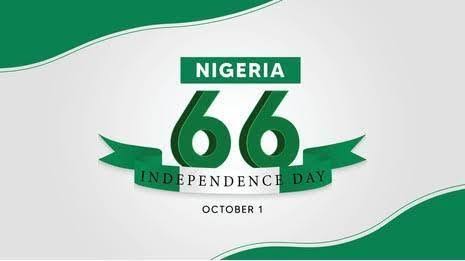
It is that time of the year again when we remember the day Nigeria gained its independence from the shackles of colonial rule. It has been 66 years. Of course, we are not where we want to be. There is a lot to complain about, and there is no shortage of reasons for Nigerians to be frustrated with the state of the country. But 66 years of self-government is still worth reflecting on and, perhaps, celebrating.
Every Independence Day, many Nigerians lament how the country has failed us. We talk about bad leadership, corruption, insecurity, poverty, poor infrastructure and a host of other problems. And rightly so. Our leaders and institutions must be held accountable for their failures. But perhaps, this Independence Day, it is time we look inward and tell ourselves another uncomfortable truth: maybe Nigeria has not failed us alone. Perhaps, in some ways, we have also failed Nigeria.
At independence, Nigeria was a young country full of hope and possibilities. There were enormous challenges, but there was also the promise of what the country could become. Sixty-six years later, what have we made of that promise?
Perhaps we should first remind ourselves of something very simple. That Nigeria is not merely a government or a geographical expression. Nigeria is its people. The country is not an abstract idea somewhere in Abuja. It is the streets we walk on, the schools we attend, the workplaces we occupy, the communities we belong to and the institutions we build. It is you and me. And if that is the case, then we cannot completely separate the condition of Nigeria from the conduct of Nigerians.
Leadership matters. A lot. Governments make decisions that affect millions of lives. Public officials control resources, make laws, build institutions and determine how public power is exercised. They must therefore be held to high standards and held accountable when they fail. But leadership does not exist in isolation from society. A democracy is, among other things, a system in which citizens have a role in choosing leaders and holding them accountable. That means citizens are not completely powerless spectators.
Look at our elections. According to INEC‘s figures for the 2023 presidential election, there were about 93.47 million registered voters, yet only about 25 million people voted, a turnout of roughly 27%. That number should make us pause and reflect. It does not mean everyone who did not vote was irresponsible. People have legitimate reasons for not participating, including distrust, insecurity, logistical difficulties and other barriers. But it does remind us that democracy cannot work solely through the actions of politicians. Citizens also have a role to play. We cannot demand accountability from leaders while completely withdrawing from the processes through which leaders are selected and held accountable.
And this goes beyond elections. The decay we complain about at the top can sometimes be seen in smaller forms at the bottom. You drink sachet water and throw the nylon on the street, then complain about a dirty country. You jump a queue and complain about the collapse of public order. You offer a bribe to get something done and later complain that corruption is destroying the country. You destroy public property because it does not belong to you personally, then complain that government does not maintain infrastructure.
Of course, these individual acts are not the same as large-scale corruption or institutional failure. A citizen dropping nylon on the street is not responsible for the mismanagement of billions of naira. But the principle is important. Societies are shaped by the everyday behaviour they tolerate and repeat. When enough people begin to treat certain bad behaviours as normal, those behaviours become part of the social environment. And when people consistently act responsibly, those behaviours can also become social norms.
This is why the argument should not be that ordinary Nigerians are responsible for everything that is wrong with Nigeria. That would be unfair and inaccurate. The government has enormous responsibility. But citizens also have responsibility. Both truths can exist at the same time.
There is another uncomfortable conversation we need to have. We often say we want a better Nigeria, yet many of us have developed such deep frustration with the country that we sometimes speak about Nigeria as though the country itself is the enemy. The leaders may fail. Institutions may fail. Policies may fail. Governments may fail. But Nigeria is bigger than the people currently occupying political offices.
Hate bad policies. Oppose bad leadership. Demand accountability. Vote leaders out. Protest peacefully. Organise. Write. Speak. Participate. But do not confuse the failure of a government with the failure of a country. The distinction matters because a country is not the same thing as the government temporarily managing its affairs.
History has shown us that citizens can challenge governments and demand change without abandoning their sense of belonging to their country. Nigeria itself has witnessed moments of strong civic mobilisation, including the nationwide #EndSARS protests of 2020, when Nigerians, particularly young people, mobilised against police brutality and demanded reform. The protests eventually contributed to the disbanding of SARS, even though the broader problems that motivated the protests did not disappear.
You can love Nigeria and still criticise Nigeria. In fact, sometimes criticism is an expression of love. Patriotism should not simply mean posting the Nigerian flag on October 1. It should mean asking what you are contributing to the country you claim to love. If you are a student, take your education seriously. If you are a journalist, tell the truth. If you are a civil servant, do your work. If you are a business owner, treat your customers fairly. If you are a politician, remember that public office is public trust. If you are a voter, take your civic responsibility seriously. If you occupy any position of authority, no matter how small, ask yourself whether you are using that position to make things better or worse. That is where citizenship begins.
And this is not an argument that citizens should stop demanding better leadership. Quite the opposite. Afrobarometer’s 2024 survey in Nigeria shows that Nigerians themselves recognise the seriousness of the country’s corruption problem: 80% of respondents said corruption had increased somewhat or a lot over the preceding year. The same survey found that only 10% believed people could report corruption to the authorities without fear of retaliation. These figures show that the problem is not simply that Nigerians do not care. Many citizens clearly recognise the problem. The challenge is turning that awareness into sustained civic action while also addressing the institutional conditions that make responsible behaviour difficult.
That is why the responsibility has to exist on both sides. Government must build institutions that work, citizens must demand institutions that work. Government must fight corruption, citizens must refuse to normalise corruption. Government must provide public services, citizens must protect public property. Government must be accountable, citizens must participate.
So, is Nigeria the problem, or are its people? Perhaps the question itself is too simplistic. Nigeria has serious institutional and leadership problems. Citizens also have responsibilities that cannot be outsourced to government. The country is a reflection of both.
If we want better leaders, we must become more demanding citizens. If we want better institutions, we must learn to respect institutions. If we want less corruption, we must stop celebrating corruption when it benefits us. If we want cleaner communities, we must stop treating public spaces as nobody’s responsibility. If we want stronger democracy, we must participate in it. And if we want Nigeria to succeed, we must stop behaving as though Nigeria belongs exclusively to whoever occupies Aso Rock. It belongs to all of us. This is our country. Not the politicians’ country. Not the government’s country. Our country.
The responsibility for rescuing it will not rest entirely on one president, one political party or one generation. It will require institutions that work, leaders who are accountable and citizens who understand that citizenship comes with responsibilities as well as rights.
So, on this 66th Independence Day, perhaps we should celebrate Nigeria, but also challenge ourselves. What are we doing to make this country better? What are we tolerating that we should be rejecting? What are we failing to do that we have been expecting someone else to do?
Maybe the Nigeria we dream about will not suddenly appear. Maybe we have to build it. One responsible citizen at a time.
Happy Independence Day, Nigeria. May we not only complain about the country we inherited. May we also become worthy of the country we hope to leave behind. God bless Nigeria.

