By: Okonkwo Chukwubuikem Destiny
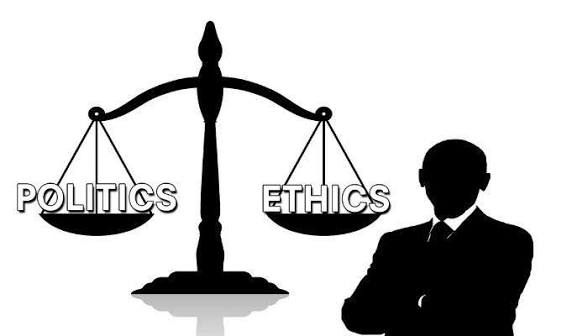
In a political climate where power often overshadows principle, the question arises: Do ethics still matter in politics? For many Nigerians, the answer can feel discouraging. Corruption scandals resurface daily, leaders evade accountability, and political promises vanish after elections. Controversies surrounding former Attorney General Abubakar Malami, particularly over asset recovery and legal decisions taken while in office, have reinforced public concerns about transparency at the highest levels of government. Reports by organizations such as Transparency International consistently rank Nigeria among countries struggling with public sector corruption. This reflects a broader challenge of accountability. Yet, ethics remain not only relevant but essential.
Democratic governance is built on trust. When leaders act without integrity, societies fracture. Citizens lose faith in institutions, political participation declines, and cynicism spreads. Ethics are the glue that holds democratic systems together. This ensures fairness, justice, and responsible leadership. In contrast, in countries like Germany and the United Kingdom, public officials have stepped down when ethical concerns arise. In 2023, German Defence Minister Christine Lambrecht resigned following heavy criticism over her handling of Germany’s military support to Ukraine and a widely condemned New Year’s message seen as inappropriate, while in the United Kingdom, former Prime Minister Boris Johnson stepped down in 2022 after a series of scandals, including violations of COVID-19 lockdown rules by government officials and a loss of confidence within his party. These actions reinforce a culture where accountability is immediate and visible.
The irony is that Nigeria does not suffer from a lack of laws; it suffers from a lack of ethical commitment. Leaders sometimes treat public office as a personal entitlement rather than a public responsibility. This chronic moral deficit weakens the rule of law, enables economic mismanagement, and fuels inequality. The prolonged and unresolved legal proceedings involving former Petroleum Minister Diezani Alison-Madueke who has faced multiple corruption allegations related to the alleged mismanagement of billions of dollars in oil revenues, with cases spanning jurisdictions such as Nigeria, the United Kingdom, and the United States further highlight how delayed justice can deepen public frustration and signal tolerance for impunity.
However, ethical politics is not a fantasy; it is a choice. Nations with strong ethical cultures are not inherently better; they simply enforce a system where wrongdoing is unprofitable and integrity is rewarded. Nigeria can do the same by strengthening institutions such as the Independent Corrupt Practices Commission and the Economic and Financial Crimes Commission, by granting them real operational independence, protecting whistleblowers through enforceable laws, ensuring transparent and merit-based public appointments, and making asset declarations of public officials publicly accessible. Transparent investigations and timely sanctions must replace prolonged silence and political protection.
Ethics in politics matter because they determine the quality of life of citizens. They influence security, education, employment, and national unity. A nation cannot develop faster than the character of its leaders. The path forward begins with values-driven leadership, leaders who see power not as a trophy but as a trust. By creating a political culture where wrongdoing has consequences and honesty is recognized, Nigeria can gradually restore faith in governance.
If Nigeria hopes to secure a stable, prosperous future, then ethics must return to the center of political life. In the end, ethical leadership is not just relevant; it is the only foundation strong enough to rebuild public confidence and move the nation forward.
