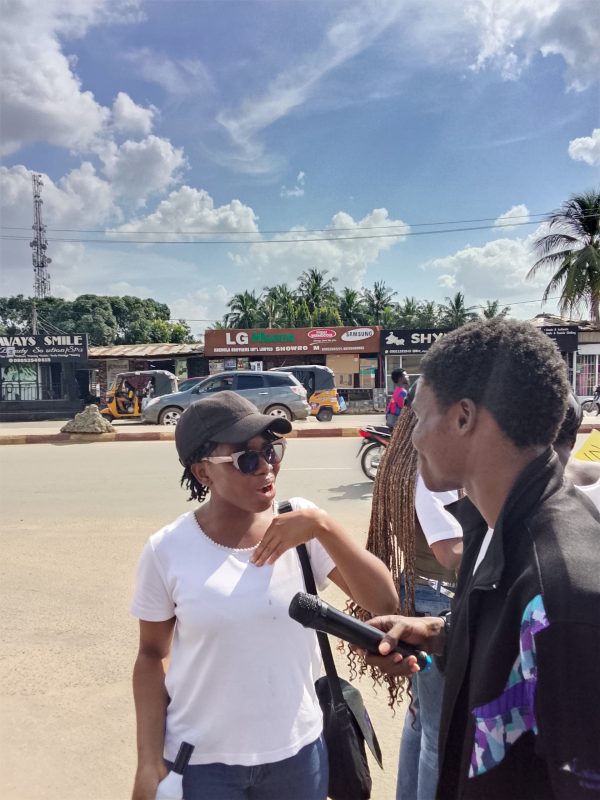
By Abiodun Awujoola
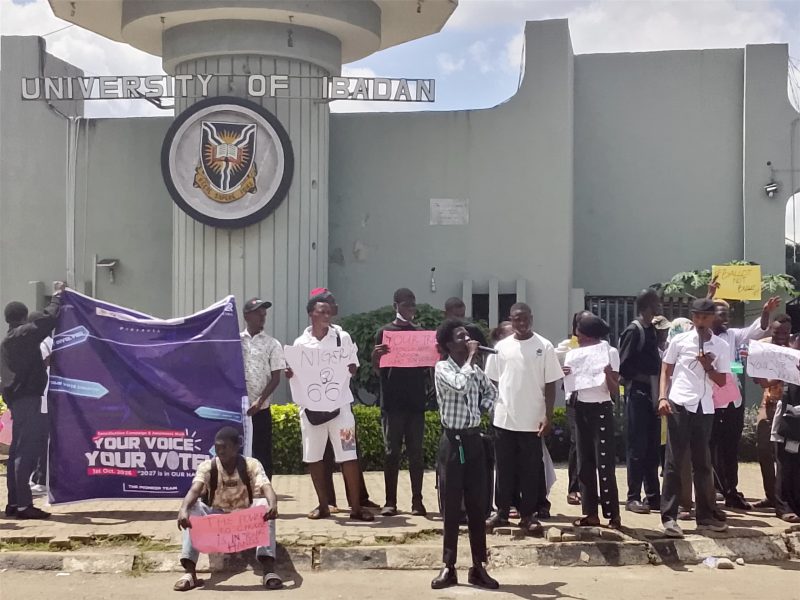
On Thursday, 1st October 2026, as Nigeria marked 66 years of independence, students of the Department of Political Science, University of Ibadan, took political education beyond the lecture halls and into the streets.
Armed with posters and united voices, they carried out a voter-awareness and mobilisation campaign across the university and beyond. Their audience included fellow students, traders, residents and other members of the public. Their message was quite simple and straightforward: your vote counts, because your vote is your voice.
FROM THE HOSTELS TO THE GATE
The mobilisation started on campus, with students moving from the Faculty of Social Sciences through Awo Hall, Queen Idia Hall, Independence Hall, Nnamdi Azikiwe Hall, Tafawa Balewa Hall, Sultan Bello Hall, The Great Ransome-Kuti Hall, Lord Tedder Hall, Kenneth Mellanby Hall and Queens Hall. From there, they proceeded to the University of Ibadan main gate.
Along the way, speakers addressed students and other members of the university community, stressing the importance of participating in elections and understanding the power that comes with the ballot.
The campaign did not focus only on the 2027 general elections. It also addressed student elections, where choices made at the ballot box directly affect how student communities are led and managed.
The message was that whether it is a national election or a campus election, political participation matters. A voter who stays away from the process leaves the decision to those who turn up.
“DAADI, MUMMY, Ẹ DIBO”: TAKING THE MESSAGE TO THE PEOPLE
At the spot around the main gate, close to the tricycle loading point, the students changed their approach and switched to Yoruba to communicate with members of the public in a language familiar to many of those gathered.
They called out:
“Dáadí, Mummy ẹ dìbò; ẹ má jẹ́ kí wọ́n rà ìbò yín pẹ̀lú owó. ₦5k má tó; ìyà ló máa kù.”
The message was directed at voters who may be tempted to exchange their votes for money, warning that a small payment would not address the longer-term consequences of political decisions.
The students also made it clear that they were not campaigning for any particular candidate or political party. They explained why people should participate in elections while encouraging members of the public to examine candidates, consider their records and make their choices according to their own judgment and conscience.
That position became particularly clear when some people asked a direct question:
“Tani ká dìbò fún?”
(Who should we vote for?)
The response was equally direct: vote for the person you believe, based on your own judgment and conscience, can best represent your interests.
The campaign was therefore presented as an exercise in participation, awareness and civic responsibility, rather than partisan mobilisation.
FROM THE UNIVERSITY TO BODIJA
After leaving the university gate, the procession moved through Agbowo towards Bodija, taking the message to residents and traders around the Bodija axis.
At Bodija market, the students continued their sensitisation, speaking with members of the public about the importance of voting and reminding them that elections are not only about politicians.
Elections affect everyone. They determine who makes public decisions, influence policy and shape communities. The students also used the familiar proverb that when two elephants fight, it is the grass that suffers, drawing attention to how political decisions can ultimately affect ordinary citizens.
A LEGACY BEYOND THE CLASSROOM
The significance of the initiative went beyond the physical walk from one location to another. It brought political education, usually encountered through lecture halls, examination scripts and academic discussions, into direct contact with members of the public.
The initiative was coordinated by the 2025/2026 set, the Pioneer Team, led by the President, Oladigbo Victor. The Vice President and other heads of organs were also present, including the NAPSS Senate President, the Editor-in-Chief of POSSPRESS and the DSP. Members of the press, distinguished senators, Literary and Debating Society members and other stakeholders also participated or lent their support.
Their presence reflected the wider departmental involvement in the exercise and its focus on taking voter awareness beyond the university community.
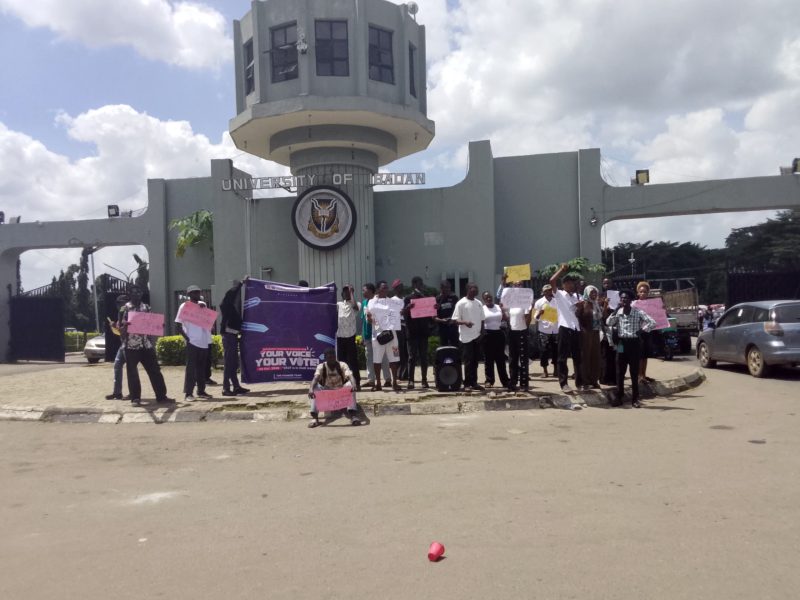
Campaign taken to the UI Gate
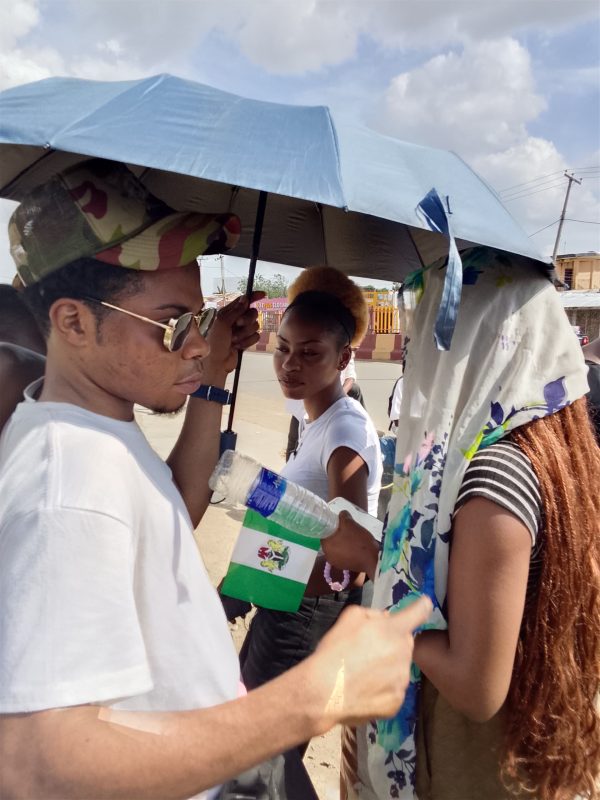
Bodija Market