

By Joseph Etsevi

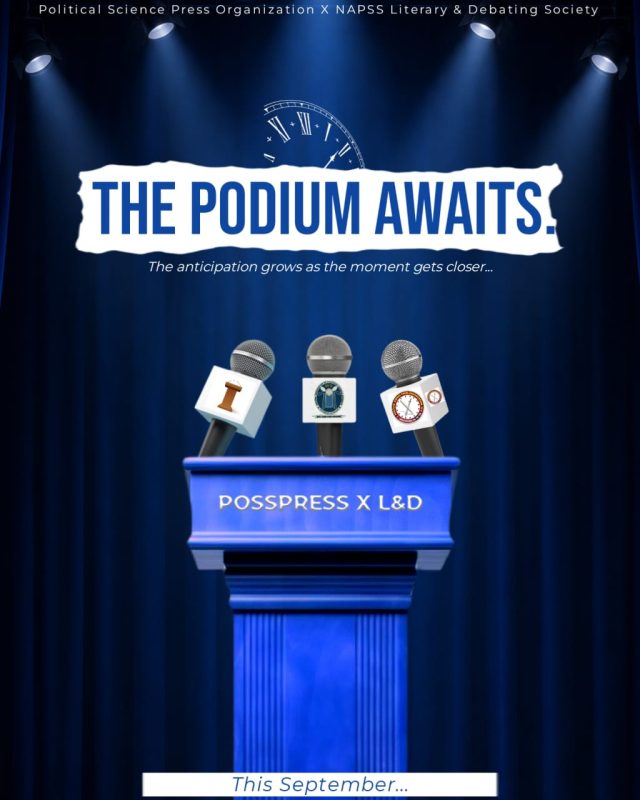
The Political Science Students Press Organization (POSSPRESS) and the NAPSSUI Literary and Debating (L&D) Society of the Department of Political Science, University of Ibadan, jointly hosted the 6th edition of the Billy Dudley Symposium and the 7th edition of Speechcraft on Wednesday, September 30, at the Faculty of the Social Sciences.
The programme brought together students, academics and members of the university community for intellectual discussions, public speaking, debate and recognition of outstanding contributions to their respective organisations within the department.
In his opening remarks, the Editor-in-Chief of POSSPRESS, Ogunleye Kolapo Olayemi, welcomed participants and highlighted the importance of creating spaces where young people can engage critically with politics, the media and issues that shape society. He noted that the symposium was designed not merely as an academic gathering but as a platform for young people to think critically about their role in Nigeria’s political and democratic process ahead of the 2027 elections.
The Billy Dudley Symposium, named after the renowned political scientist, the late Billy Joseph Stanley Oritsesaninomi Dudley, was themed “Youth, Media, and the Road to Nigeria’s 2027 Elections.” The symposium focused on the relationship between young people, the media and electoral participation as Nigeria approaches the 2027 general elections.
Speaking at the symposium, Dr Kingsley Oladayo Ogunne addressed the question, “Beyond Social Media, How Do We Transform Youth Demographics into Real Electoral Power?”
His presentation examined the need to move beyond online engagement and consider how Nigeria’s large youth population can translate its demographic strength into meaningful participation and influence in the electoral process.
Dr Ogunne, a lecturer at the University of Ibadan and a public relations practitioner, emphasised the numerical strength of Nigerian youths and how they can harness this advantage to shape the country’s political landscape.
Dr Ogunne cited the 2023 presidential election as an example. President Bola Ahmed Tinubu, who emerged as the winner, polled 8,794,726 votes, while INEC recorded 93,469,008 registered voters for the election. Of this figure, 37,060,399, representing 39.65 per cent, were young people between the ages of 18 and 34.
The figures highlighted the gap between the size of Nigeria’s youth population and actual electoral participation. Overall turnout in the 2023 presidential election was about 26.7 per cent of registered voters, according to INEC.
Also featured at the symposium was Dr Ridwan Abiola Kolawole, a lecturer in the Department of Communication and Language Arts and a practising journalist, who spoke on the question, “Who Watches the Watchdog?”
His session explored the responsibility of the media to the public, as well as issues surrounding accountability, oversight and the responsibilities of the media and the press in a democratic society.
Dr Kolawole explained that the term “watchdog” was originally associated with the media. However, with the rise of citizen journalism, he noted that young people now also have a responsibility to hold the media accountable.
According to him, the media is not only a watchdog but is also accountable to the people. He noted that audiences, colleagues and regulators also watch and scrutinise the media.
He further emphasised the role of young people in politics, stating, “Nigerian youths are not just audience, they’re active stakeholders in Nigerian politics.”
Dr Kolawole also encouraged participants not to unnecessarily portray Nigeria negatively.
“Don’t always portray Nigeria as bad. The politicians have international passports; they don’t have issues when they go abroad. It’s always ordinary Nigerians who are stigmatised when they go out because of the bad things we say about the country. Don’t further complicate your problem by portraying the country badly,” he said.
He, however, clarified that this does not mean citizens should remain silent about bad governance.
Dr Kolawole also reiterated the dangers of fake news, particularly as the country approaches the 2027 general elections. He encouraged participants to desist from sharing information they could not verify.
“Don’t share news you don’t know the source of or cannot verify. You can always go on the internet to verify any news or information before you share. People will share videos from four years ago and claim they are new videos. Verify the video or broadcast before you share them,” he said.
The programme also featured Speechcraft 7.0, organised by the L&D Society under the theme “MACHTKAMP: Power Struggle.” The Speechcraft provided participants with an avenue to demonstrate their oratory, public-speaking, argumentative and critical-thinking abilities.
A major highlight of the Speechcraft was an interdepartmental debate between the Department of Political Science and the Department of Philosophy. Political Science emerged victorious after the contest, adding a competitive dimension to the day’s intellectual activities.
In her closing remarks, the President of the L&D Society, Yakub Favour Borere, expressed appreciation to the speakers and judges for their contributions to the programme. She also thanked members of both organisations and other participants for their efforts and presence, noting the collective contribution that made the event possible.
Beyond the intellectual sessions and debate, the event also featured an awards and recognition segment, where individuals who had distinguished themselves through their contributions to the L&D and Press communities were honoured.
Essien Esther received the L&D Rookie of the Year award, while Joseph Etsevi was named Press Inductee of the Year. Adebanjo Zainab Adejoke also received the Pressman of the Year award.
The speakers, judges and participants were additionally presented with certificates of participation in recognition of their involvement in the programme.

