



The recently concluded Faculty of the Social Sciences election was riddled with avoidable controversies, which leave more questions than answers. The faculty’s electoral body, IFEC, played a major role in this, and many FATSSAITES are still waiting for answers.
From the controversial disqualification of a candidate, to a campaign bulk SMS message on the morning of the election, to the use of students’ phone numbers without their consent, IFEC managed all of it poorly.
The Fredrick disqualification
To start with, the first controversy was the disqualification of Mr Fredrick Sunday Chibueze, the candidate for Financial Secretary. He was initially disqualified on the recommendation of the FATSSSA press, despite having passed IFEC screening.
It is important to make this clear. IFEC counting a candidate’s performance at press night/engagement as part of the qualification threshold is a welcome development and allows for better scrutiny. However, this becomes unfair if candidates are not informed of the rule. Article 10, Section (ii)(g), Sub-section (IV) of the FATSSSA constitution states that IFEC “shall have the power to draw up any additional electoral guidelines other than those stated in the Constitution. Such guidelines shall however be approved by the House and shall be made public.”
The new press night clause was neither made known to the candidates involved nor made public. Mr Fredrick was later reinstated after uproar from different quotas and eventually won the election, but this error of judgement would not be IFEC’s last.
The election day bulk SMS message
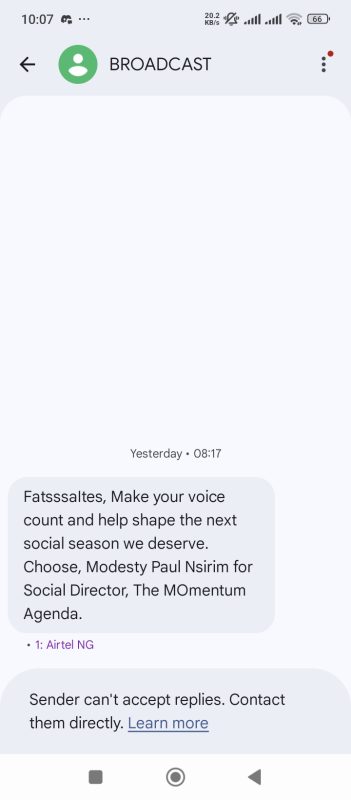
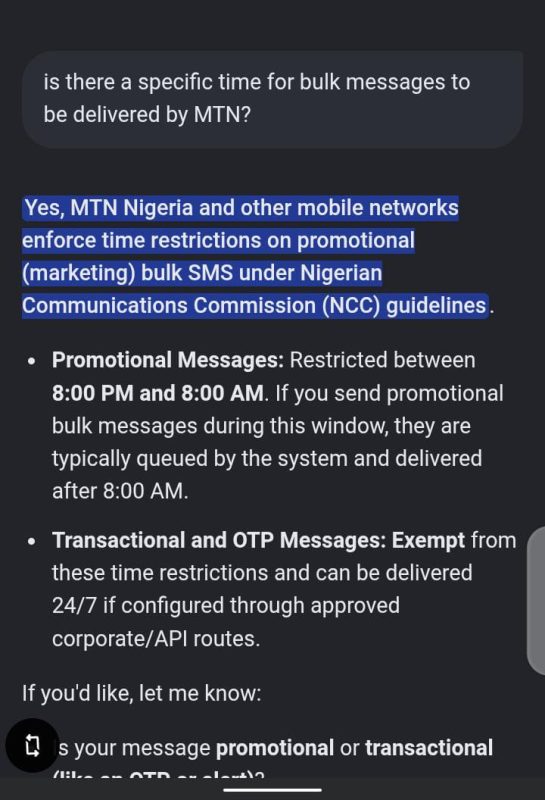
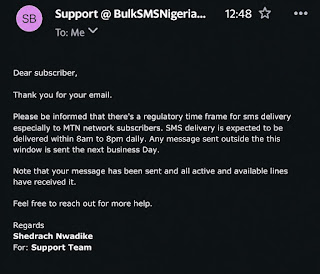
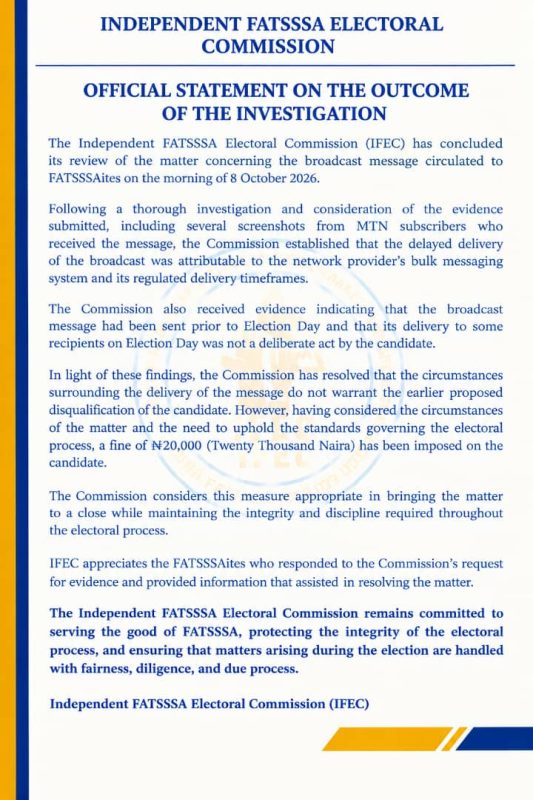
Another controversy broke out on the morning of the election, 8 October, when FATSSAITES received a bulk message at about 8:17 AM urging them to choose Modesty Paul Nsirim for Social Director. Candidates caught campaigning on election day are typically disqualified. After its investigation, however, IFEC ruled that the delay was caused by the network provider’s bulk messaging system and was not a deliberate act. It fined her ₦20,000 instead.
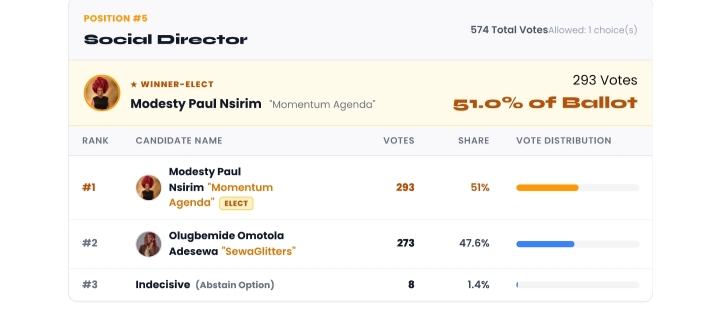
Miss Modesty went on to win by just 20 votes, 293 to 273, against Olugbemide Ọmọtọla Asdesewa. It cannot be overemphasised that this message may have given her an unfair upper hand over her opponent.




The Ridiculous ₦20,000 fine
Now, can we also talk about the fine? It is ridiculous from any angle. The Social Director form cost only ₦4,000, yet IFEC fined a candidate five times that amount. This alone can encourage corruption in office. The fact that the candidate paid it rather than stepping down also shows a sheer level of desperation. It is one mess after another.
IFEC needs to understand that paying ₦20,000 does not take away an unfair advantage. It also sets a bad precedent, as desperate candidates willing to pay hefty fines may exploit this loophole in future elections.

The data privacy concern
Now, let’s talk about the data privacy concern.
Many FATSSAITES received the candidate’s bulk message on their personal phone numbers. Students say they never gave her their numbers and never agreed to receive campaign messages from her or anyone else. The numbers appear to have been taken mostly from WhatsApp groups and passed to a bulk SMS company.
Being in a class or faculty WhatsApp group is not the same as agreeing to be campaigned to. Under the Nigeria Data Protection Act 2023, personal data must be processed fairly, lawfully and transparently, and a phone number that can be linked to a person is personal data. Collecting numbers for one purpose, using them for another, and handing them to a third-party company raises serious questions.
Whether the law was broken is for the Nigeria Data Protection Commission to decide. But FATSSAITES deserve to know how their numbers were obtained and who has them now. IFEC’s statement says nothing about this. It deals with when the message was delivered, not how it found its way to students’ phones. Perhaps IFEC doesn’t see this as an issue
What IFEC must do
IFEC needs to address FATSSAITES on all of this. It cannot be swept under the carpet. It is too dangerous for the faculty, for IFEC and for free and fair elections.
From a controversial disqualification, to a message on election morning, to concerns over how students’ phones were reached, this election raised questions that IFEC has yet to answer properly. A fine does not settle them. FATSSAITES want answers, and they deserve them now.

