
By: Idris Adetola, Ogunleye Kolapo
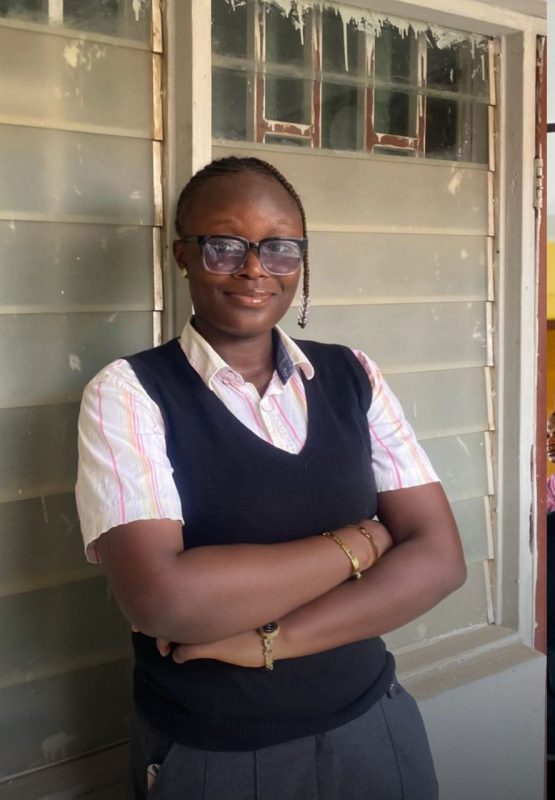
In this POSSPRESS conversation with Ayomide Anne Olayinka, former Senate President, NAPSS UI, she opens up on her leadership journey, first-class feat, study strategies, student pitfalls, and her take on Nigeria’s political climate.
POSSPRESS: Good morning. Please introduce yourself.
Anne: Good morning. I’m Ayomide Anne Olayinka.
POSSPRESS: When did you assume office as Senate President? And motivated you to go for the position?
Anne: I honestly can’t remember the exact date but I’ll say it was around February 2025.
I’ll say some reasons motivated me to go for the position. I loved the senate house from 100 level. I loved the representation, processes and procedures.also, as at that time, I was the longest sitting senator. So I guess, the cap fits.
POSSPRESS: How has the journey been leading the legislative body of the department?
Anne: I’ll say it wasn’t an easy task but I enjoyed every bit of it. It was tasking and demanding but I knew that was what I signed up for.
POSSPRESS: What was your vision upon assuming office?
Anne: My major vision was that, by the time I would be handing over to the next tenure, I would handover a very firm, assertive and strong senate house.
On Leadership Impact and Achievement
POSSPRESS: What would you say is your most significant achievement in office?
Anne: My most significant achievement was the training and formation the new senators underwent. I started my tenure with 6 returning senators, out of which 4 were principal officers. The constitution demands 25 members. That meant I had to get 19 new people onboard. The senate house is so delicate that it demands strong members.
Initially, I was scared about how I would achieve my vision of leading a strong house with majority of my members being new hands. With the help of other principal officers, we held orientation and gave detailed explanations when necessary. And I was so glad because by the second sitting, everyone already caught up and ever since, the senate house had a smooth run. So I’ll say my major achievement was the building and transformation of new members to active, vibrant and assertive senators.
POSSPRESS: Can you recall any reforms or policies you are particularly proud of?
Anne: The one new policy that was deliberated on during my tenure was the modalities of bye elections. It was deliberated that NAPSSites often wait to run for office through the bye-election because its modalities aren’t as stringent as that of the normal election. To that effect, a consensus was reached that the modalities to normal elections should apply to that of bye-elections (based on the decision of the sitting senate house). That decision sitting, I expect, should be in place during this new administration.
POSSPRESS: How did your leadership impact students in the department?
Anne: I’ll list them. I performed my primary duty of legislation, both to my constituency and to NAPSSites.
In conjunction with other heads of organs, I attended meetings with the HOD and other lecturers to inform them about the affairs and concerns of NAPSSites.
I contributed to the planning, execution and success of the NAPSS WEEK’25. With the help of the senators, we planned and held the legislative summit 3.0. During the events, NAPSSites were offered an ebook and opportunity of mentorship with our guest speakers.
NAPSS collaborated with other organizations (twelve11, Ibadan Peace club etc). NAPSSite got invited to events e.g the first Nigerian Model National Assembly. The opportunities were facilitated through the efforts and recommendations of the President and me.
POSSPRESS: How effective is the legislative arm in student governance?
Anne: The legislative arm in student governance can be very effective when done right. They represent student voices. They propose and pass bills. They serve as a check to executive decisions. The legislative arm helps ensure balance and transparency which is very important in student governance.
POSSPRESS: How were you able to balance leadership, personal life, and academics?
Anne: The very first thing I did (from 100 level) was taking time to know myself. I took time to know my strengths and weaknesses. I knew the study and assimilation pattern that works best for me. Afterwards, I added extra activities to it, bit by bit so I don’t outweigh my strength. I don’t like taking on too much. So in everything I do, I know my academics comes first and it’s paramount. Then other activities fall in behind it. And I do them at my convenience, as long as I place my academics first.
On First-Class Achievement
POSSPRESS: Were you on a first-class trajectory from your 100-level days?
Anne: I got on a first class from 200 level. I had 3.48 (I think in 100 level). I had a change in my choice of elective courses and I studied harder.
POSSPRESS: What specific study method worked best for you?
Anne: I won’t say I have a fixed study method. But after a lot of introspection, I realized some things worked for me.
I always have to attend classes because explanations tend to stick.
I write out everything I’m reading, twice. I explain what I’ve read, based on my understanding to anyone willing to listen (especially my roommates).
I always take out time to rest and refresh my mind and brain. It makes me feel lighter. Like I said, I figured out what works for me.
POSSPRESS: Were there moments you felt academically overwhelmed?
Anne: Anytime I feel overwhelmed, the first thing I do is sleep, or just relax. Handling tedious tasks requires having a clear mind and head. When I’m up, I then make a scale of preference of all the tasks before me. And I take them one at a time. And I also assign time frames to each task.
POSSPRESS: How did you prepare for essay-based exams?
Anne: For essay based exams, I first of all create an outline. I sometimes use AI to help with my outlines. Then I pick each subtopic and make research on it. I use different sources. I skim through them to ensure they tally. I copy and paste my findings in my phone notepad. Once I’m done, I bring out my book and start writing every detail I got. It helps with assimilation.
POSSPRESS: Which political theory or thinker influenced you the most?
Anne: I’ll say my favorite theory is the rational choice theory. It explains the fact people don’t do things just for doing sake. People do things because it’ll benefit them one way or another. And it’s beautiful watching it play out in the daily choices we make.
POSSPRESS: What habits contributed most to your success?
Anne: A daily habit that contributed to my success in general was socializing with people. I went to class daily, not just to learn. But with the joy of knowing I’m going to be in the midst of people and interact. I didn’t just come to school to learn. I came to network. And so far, I’m grateful for the amazing people I’ve interacted with for the 4 sessions i spent in UI.
POSSPRESS: Which level was the most challenging?
Anne: The most challenging level for me was 300 level. Hmmmmmm. The system became firmer because our lecturers expected us to be well-grounded in the discipline already. Classes got intense. Grading became stricter. Then the 300 level first semester timetable didn’t help matters. We wrote 6 exams in 3 days. Some people wrote 3 exams in a day. 300 level was so demanding.
POSSPRESS: What is the biggest trap students fall into?
Anne: One big trap students fall into is judging a course by the lecturer in charge. You’ll rarely succeed in a course where you have a stereotype or preconceived notion about the Lecturer. And not everything seniors say about a particular course or lecturer is true. Perspectives differ. Just go to your classes with a clear mind.
On Politics and National Issues
POSSPRESS: Do you think Nigeria’s problem is leadership or followership?
Anne: There’s no one fixed answer to this question honestly. The leaders and citizens of Nigeria are a problem. We have leaders who are selfish, corrupt, and unable to plan well for the country. The citizens also don’t help matters. We don’t hold our leaders accountable. There’s apathy. Ethnic and religious divisions is dominant.
Both the government and the people are the problem. We can’t just apportion blame to an entity. Every one of us has a responsibility and duty to carry out to make Nigeria better.
POSSPRESS: What is your perspective on state policing?
Anne: In my opinion, the push for state policing is borne out of the urgent need to address the country’s escalating security crises, banditry, terrorism, kidnapping an the likes. I feel state-controlled police would be more effective. They would respond faster to local threats since they already know the terrains within the state and gain community trust. It could also help crime prevention. But one major concern i still have is whether every state has the resources and capacity to maintain professional and train a standard police forces. Not all fingers are equal. It might function adequately in some states and flop in another.
POSSPRESS: How would you describe the current political atmosphere in Nigeria?
Anne: The political landscape is fragmented. There’s divisions over national issues. We’re battling economic hardship, insecurity, banditry and increase in fuel prices. youth are using social media to demand accountability and tangible solutions to pressing challenges we’re facing. Alliances are being made. Campaign is approaching. I’ll just say we’re in the preparatory phase. There’s still more “political drama” ahead. I look forward to the cross carpetings though.
Personal Reflections and Future
POSSPRESS: Would you consider going into active politics?
Anne: I doubt it. I don’t think I have the strength for Nigerian politics
POSSPRESS: What is one major misconception about studying Political Science?
Anne: The major one is that which we all hear, “do you want to be a politician?” And the conception that political science is solely about studying politics.
POSSPRESS: What advice would you give to a 100-level student aiming for a first class?
Anne: As an 100 level student, if you’re aiming for a first class, You should first take your time to introspective and know what works for you.
You should know the study pattern that works for you.
Do not copy a method because everyone is doing it.
Do what works for you. Also, take on extra responsibilities one at a time.
Do not pile too much duties on yourself.
And put it at the back of your mind that, you won’t always get an A. In fact, getting a B might be hard. It’s all part of the journey.
POSSPRESS: How would you like your tenure to be remembered?
Anne: My tenure would always be remembered as that of the first female Senate President in NAPSS. That’s the most unique feature of my tenure.
POSSPRESS: Thank you for your time.
