
By: Ogunleye Kolapo Olayemi
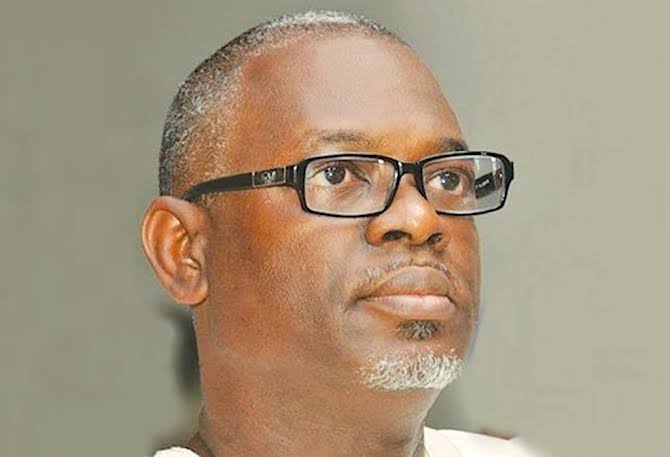
In 1961, in Okemesi, present-day Ekiti State, Akin Osuntokun was born into the famous Osuntokun household. His father, Chief Oduola Osuntokun, was more than a politician, he was a respected educationist and a key figure in the Western Region government, serving under both Obafemi Awolowo and Ladoke Akintola. The family name carried privilege, influence, and access, but it also came with high expectations.
From his early years at Christ’s School, Ado Ekiti, to his eventual admission into the University of Ibadan, Akin’s path seemed destined to orbit the corridors of power. But childhood, as it often does, had its own lessons.
In 1966, when Akin was just four, political thugs set fire to the Osuntokun family home. His father had sided with Chief SL Akintola during the Awolowo–Akintola split, a choice that placed the family in the crosshairs of a deeply polarized political struggle. For Akin, it was a baptism by fire into the realities of political consequence. Years later, he would still point to that moment as the first memory he could truly call his own.
He would later describe that period in an interview with ThisDay newspaper as: everything Awolowo represented was seen as right, everything associated with Akintola was dismissed. Growing up in the shadow of such turbulence left little room for blind acceptance. For a child, it forced early independence of thought, and a need to question what everyone else seemed certain about. It also planted the seeds for the curiosity and critical thinking that would later guide him through university, journalism, and eventually the heart of Nigeria’s political arena.
It is not surprising, then, that his path eventually led to the University of Ibadan, where he studied Political Science. He stayed on to complete his postgraduate studies as well. It’s safe to say his knowledge in the degree provided a framework for understanding how power operates within a society like Nigeria.
After leaving university, his direction was not immediately clear in the way many would expect. Like a lot of graduates of his time, he considered careers in banking or the oil sector. That dream didn’t materialize. Instead, he found himself in journalism. A move that, in retrospect, seems almost inevitable.
Beginning with Vanguard Newspaper, and later moving through Daily Times and The Guardian, Osuntokun, through his pen, became a voice to be reckoned with. He wrote about politics not as an observer standing outside it, but as someone who understood its internal logic. These were not easy years to take such a stance. Nigeria was under the military rule of Sani Abacha, and criticism carried consequences. Yet he continued. For him, writing was not just an expression; it was a way of engaging with the world.
His first attempt at direct participation in politics came in 1999, when he contested for a senatorial seat in Ekiti State under the platform of Alliance for Democracy (AD). His ambition, however, didn’t succeed due to local political opposition. He then transitioned into the corporate space, joining the Dangote Group, where he handled corporate affairs and public engagement. In another word, pubic relations. This is where his understanding of politics, both in theory and in practice, found a different kind of application.
At the time, Aliko Dangote needed someone who understood public perception, especially given the political sensitivities of the post-military era. Osuntokun’s background in political writing and analysis made him a strong fit.
It was from there that the next phase of his career began to take shape.
Chief Olusegun Obasanjo, the then president of Nigeria, had been reading his columns. Baba must have found value in his writings. In 2002, Osuntokun was brought into his re-election campaign as Director of Media and Publicity. From that point on, he became part of the president’s inner circle, what he would later describe as the “kitchen cabinet.” By 2006, his position as political adviser was formally recognised, but in practice, he had already been functioning in that role.
What is perhaps more telling is that his relevance did not end with that administration. In 2011, he played a role in the presidential campaign of Goodluck Jonathan. He was the Director of the PDP Presidential Campaign. More than a decade later, he would again take on a central role, this time as Director-General of the Obi-Datti Presidential Campaign Council for Peter Obi. It’s no coincidence that Akin Osuntokun had remained relevant in the Nigerian public space since the early 2000s.
It is tempting to explain a career like this in terms of background or access. And while those factors exist, they do not fully account for its longevity. What stands out more clearly is a certain consistency in thought, an ability to engage political questions with depth, and a willingness to remain intellectually active across different phases of life.
His training in Political Science provided a foundation, but it was sustained engagement that made the difference. He wrote, he analysed, he participated, and over time, he became part of the very system he had spent years studying.
There is also another interesting lesson in his story. Political Science does not confine itself to one path. It does not demand that all who study it must end up in elective office. Influence takes different forms, and in many cases, it is exercised most effectively outside the spotlight.
In the end, his career does not offer a single answer to what a Political Science degree leads to. Instead, it offers a range of possibilities, shaped not just by the degree itself, but by how it is used. And perhaps that is the point.
